Introduction
New York is home to 893,131 minority-owned businesses — a substantial share of the state's 2.4 million small businesses overall, according to the SBA Office of Advocacy's 2025 New York profile. Despite that scale, access to capital remains a persistent gap. Federal Reserve data shows approval rates for Black- and Hispanic-owned firms have historically trailed the broader market — a disparity that leaves viable businesses underfunded.
SBA loans are one of the most effective tools for closing that gap. Because the SBA guarantees a portion of each loan rather than lending directly, lenders take on less risk. That typically means lower interest rates, longer repayment terms, and more accessible approval criteria for entrepreneurs who may have limited collateral or shorter credit histories.
This guide covers the five best SBA loan programs for minority-owned businesses in New York, along with state-specific resources and practical guidance to help you choose the right fit.
Key Takeaways
- 893,131 minority-owned businesses operate in New York — and SBA loans are among the most accessible financing tools available to them.
- Nationally, about 33% of the SBA loan portfolio goes to minority-owned businesses.
- The top five programs — 7(a), Microloan, 504, Community Advantage, and Express — each target different stages, capital needs, and credit profiles, so the right fit depends on where your business stands.
- New York's Empire State Development programs stack with SBA financing, giving minority-owned businesses access to a broader pool of capital than federal loans alone.
- Working with an SBA Preferred Financial Services company like Franklin Financing Services speeds up approval — often cutting weeks off a standard application timeline.
Understanding SBA Loans for Minority-Owned Businesses in New York
How SBA Loans Actually Work
The SBA does not lend money directly. Instead, it partners with approved lenders — banks, credit unions, CDFIs, and nonprofit intermediaries — and guarantees a portion of each loan. That guarantee reduces the lender's risk, which means applicants who might not qualify for conventional bank financing often can qualify for an SBA loan.
A business with limited collateral, a shorter operating history, or a credit profile that falls below a traditional bank's threshold can still access meaningful capital through SBA-backed channels — and that's exactly what makes this structure relevant for minority entrepreneurs in New York.
Who Qualifies as a Minority-Owned Business
For most SBA loan programs, there is no formal minority certification requirement. However, a business is generally considered minority-owned when it is at least 51% owned and operated by individuals from one of the following groups:
- Black or African American
- Hispanic or Latino
- Asian-Pacific
- Asian-Indian Subcontinent
- Native American or Alaskan Native
NYS MWBE certification (issued through Empire State Development's Division of Minority and Women's Business Development) is a separate state credential. You don't need it to apply for SBA loans, but it can unlock additional benefits — including state-level programs covered later in this article.
SBA Lending and Minority Businesses in New York
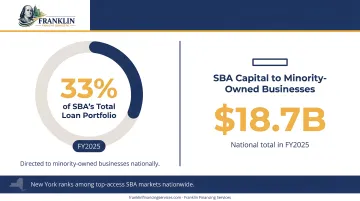
Nationally, the SBA directed $18.7 billion in capital to minority-owned businesses in FY2025, representing roughly 33% of its entire loan portfolio. New York, as one of the country's largest small business markets, captures a significant slice of that volume — making SBA programs more accessible here than in most other states.
Best SBA Loans for Minority-Owned Businesses in New York
These five programs were selected based on loan flexibility, accessibility for applicants with varying credit profiles, relevance to New York's business landscape, and overall terms.
SBA 7(a) Loan
The SBA 7(a) is the most widely used SBA loan program because it covers nearly every legitimate business need: working capital, equipment, commercial real estate, leasehold improvements, business acquisitions, and debt refinancing. For established minority-owned businesses in New York looking to grow, it's the most versatile option available.
Nearly one-third of all SBA 7(a) loans nationally go to minority-owned businesses. The program offers some of the lowest interest rates in the small business lending market, with variable rate caps structured as a base rate plus a spread (ranging from 3.0% to 6.5% depending on loan size). Repayment terms stretch up to 25 years for real estate.
Franklin Financing Services handles SBA 7(a) loans from $150,000 to $5 million. Its Preferred Financial Services designation enables faster processing than standard lenders — particularly useful when navigating a complex application for the first time.
| Spec | Details |
|---|---|
| Loan Amount | Up to $5 million |
| Repayment Term | Up to 25 years (real estate); up to 10 years (working capital/equipment) |
| Best For | Expansion, working capital, equipment, real estate, debt refinancing |
SBA Microloan Program
The SBA Microloan program offers up to $50,000 through nonprofit intermediary lenders — many of which are specifically mission-driven to serve minority, immigrant, and low-income entrepreneurs. The average loan is around $13,000, and repayment terms run up to 7 years.
Beyond capital access, most microloan intermediaries provide business training, mentorship, and technical assistance alongside the loan. Accompany Capital (formerly the Business Center for New Americans) is a key New York intermediary serving immigrant and minority entrepreneurs with microloans ranging from $500 to $50,000.
For early-stage businesses or owners building their credit history, this is often the most accessible entry point in the SBA ecosystem.
| Spec | Details |
|---|---|
| Loan Amount | Up to $50,000 (average ~$13,000) |
| Repayment Term | Up to 7 years |
| Best For | Startups, early-stage growth, small inventory or equipment purchases |
SBA 504 Loan
The SBA 504 program is built for one purpose: financing major fixed assets. Think commercial real estate, large equipment, and significant capital improvements. For a minority business owner in New York looking to purchase a building or invest in heavy machinery, this is the program designed for that need.
The structure is what makes it accessible:
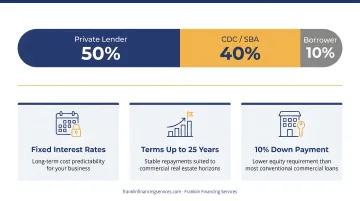
- 50% financed by a private lender
- 40% financed through a Certified Development Company (CDC) backed by the SBA
- 10% down from the borrower
That 10% equity requirement is lower than most conventional commercial real estate loans demand. Fixed interest rates and terms up to 25 years add long-term cost predictability — particularly valuable in New York's high-cost real estate environment.
| Spec | Details |
|---|---|
| Loan Amount | Up to $5.5 million (higher for certain energy projects) |
| Repayment Term | 10, 20, or 25 years |
| Best For | Commercial real estate purchases, heavy equipment, long-term fixed assets |
SBA Community Advantage Loan
The Community Advantage program — now operating under the Community Advantage Small Business Lending Company (CA SBLC) framework — was designed specifically for businesses in underserved markets. That includes low-to-moderate income communities, minority entrepreneurs, and veteran-owned businesses.
Key distinctions from standard 7(a) loans:
- Issued through mission-based, community-focused lenders rather than traditional banks
- More flexible credit standards than standard 7(a) underwriting
- SBA guarantee of up to 85% on loans up to $150,000 (75% above that)
- Loan amounts fill the gap between microloans and full 7(a) loans
Accompany Capital in New York has been granted CA SBLC licensing, making it one of the few local intermediaries authorized to issue these loans. For minority business owners in urban or underserved New York neighborhoods, this program is among the most directly targeted options available.
| Spec | Details |
|---|---|
| Loan Amount | Up to $350,000 |
| Repayment Term | Up to 25 years |
| Best For | Minority-owned businesses in underserved/low-income New York communities |
SBA Express Loan
The SBA Express Loan is built for speed. Lenders respond within 36 hours, compared to weeks for standard SBA applications — a meaningful difference for minority business owners facing time-sensitive opportunities or urgent operational needs.
The trade-offs are worth understanding:
- 50% SBA guarantee (lower than the 75–85% on standard 7(a) loans)
- Slightly higher interest rates than standard 7(a)
- Available as both a term loan and a revolving line of credit
This loan works best for businesses with a strong credit profile that need capital quickly. If your application requires flexibility on credit standards or maximum guarantee coverage, the Community Advantage or standard 7(a) programs are better starting points.
| Spec | Details |
|---|---|
| Loan Amount | Up to $500,000 |
| Repayment Term | Up to 25 years (term loan); up to 10 years (line of credit) |
| Best For | Fast capital for expansion, equipment, or working capital |
New York-Specific Programs and Resources for Minority Entrepreneurs
Beyond the core SBA loan programs, New York minority entrepreneurs have access to state-level funding and federal support that can work alongside — or independently of — SBA financing.
Empire State Development — Minority and Women Revolving Loan Trust Fund
This New York State program provides direct loans to minority- and women-owned businesses that lack access to traditional financing, and it can be used alongside SBA funding:
- Working capital loans up to $35,000 for day-to-day operational needs
- Fixed-asset loans up to $50,000 for equipment, machinery, or property improvements
- NYS MWBE certification administered through ESD's Division of Minority and Women's Business Development — required for this program and many other state resources
Stacking ESD funding with an SBA loan can help bridge gaps that neither program covers alone.
SBA 8(a) Business Development Program
The 8(a) program is not a loan — it's a federal contracting and mentorship program. Qualifying minority-owned businesses can compete for federal set-aside contracts, receive management training, and access mentorship through SBA. Eligibility requirements include:
- At least 51% minority ownership
- Personal net worth of $850,000 or less
- Generally 2 years in business (or a waiver)
For New York minority businesses looking to expand beyond private clients, 8(a) certification opens access to the federal government's billions in annual set-aside contracts — a meaningful diversification of revenue.
MBDA Business Center and SBA New York District Office
These two offices serve as on-the-ground starting points for minority entrepreneurs navigating the funding landscape:
- MBDA Manhattan Business Center (48 Wall Street, New York, NY 10005 | 718-766-8156): Connects minority business enterprises to capital, contracts, and strategic partners.
- SBA Metro New York District Office (26 Federal Plaza, Suite 3100, New York, NY 10278 | 212-264-4354): The local SBA resource for finding approved lenders and program guidance specific to the region.
Both offices offer free consultations — a practical first step before submitting any loan application.
How to Choose the Right SBA Loan for Your New York Business
Match the Loan to Your Need
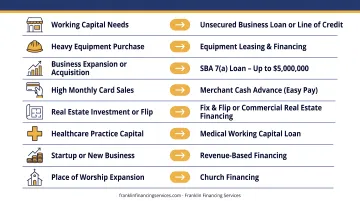
| Business Need | Best Program |
|---|---|
| Working capital or general expansion | SBA 7(a) |
| Startup or small purchase | SBA Microloan |
| Commercial real estate or heavy equipment | SBA 504 |
| Underserved community, mid-range capital | Community Advantage |
| Fast capital, time-sensitive need | SBA Express |
Documents to Prepare in Advance
Most SBA applications require a similar core package. Having these ready before you approach a lender reduces delays significantly:
- Business plan with financial projections
- Personal and business tax returns (last 2–3 years)
- Profit and loss statements and balance sheet
- Proof of ownership and business licenses
- Personal financial statement for all owners with 20%+ stake
Why a Preferred Lender Matters
Once your documents are in order, the lender you choose shapes how quickly the process moves. SBA Preferred Financial Services companies have delegated authority to approve loans faster than non-preferred lenders, because files don't need to go through the SBA individually for approval. For minority-owned businesses navigating the SBA process for the first time, that speed and expert guidance can make a real difference.
Franklin Financing Services holds this designation for the SBA 7(a) program, covering loans from $150,000 to $5 million. The firm also charges a loan packaging fee of $750–$2,000 (refunded if the loan is declined by credit), which covers application preparation support — a practical resource for borrowers who want their application structured correctly from the start.
Conclusion
Minority-owned businesses in New York have real options — and each SBA program serves a different need:
- SBA 7(a) — broadest flexibility for working capital, acquisitions, and more
- Microloan — most accessible entry point for early-stage businesses
- SBA 504 — built specifically for fixed-asset investments like equipment or real estate
- Community Advantage — designed to reach underserved communities directly
- SBA Express — prioritizes speed when timing is critical
Choosing the right program depends on where your business is today — your stage, the specific capital need, and your current credit profile. Applying to the wrong program wastes time and can hurt your approval odds, so the match matters.
If you're ready to explore which SBA program fits your business, Franklin Financing Services offers a free evaluation at franklinfinancingservices.com/contact.php. As a company designated Preferred by SBA lenders, they're experienced in packaging applications that meet SBA standards — which typically means fewer delays and a smoother process from submission to funding.
Frequently Asked Questions
Are there SBA loans specifically for minority-owned businesses in New York?
SBA loans are not exclusive to minority applicants, but programs like the Community Advantage Loan and Microloan are specifically designed for underserved markets. Nationally, about 33% of SBA loans go to minority-owned businesses. New York also has state programs through Empire State Development that complement federal SBA options.
What is the easiest SBA loan to get?
SBA Microloans are generally the most accessible, with lower loan amounts and more flexible credit requirements administered through nonprofit intermediaries. For speed, the SBA Express Loan responds within 36 hours and suits qualified borrowers who need capital quickly.
What is the $10,000 SBA grant?
This refers to the EIDL Advance program, which provided up to $10,000 in grants during the COVID-19 pandemic. That program is now closed. Minority business owners can now explore MBDA grants, Empire State Development programs, and nonprofit alternatives.
What credit score do I need for an SBA loan?
Most SBA lenders prefer a personal credit score of around 640–680 for standard 7(a) loans. SBA Microloans and Community Advantage loans may accept scores around 620, depending on the intermediary. Strong business financials and a solid business plan can sometimes offset a lower score.
Do I need minority business certification to apply for SBA loans?
No — MBE or 8(a) certification is not required for most SBA loan programs. However, certification opens access to federal contracting through the 8(a) program and state resources like ESD's Revolving Loan Trust Fund, both of which require certified minority status.
Can a startup apply for SBA loans in New York?
Yes — SBA Microloans and 7(a) loans are available to startups with a viable business plan and financial projections. Most other SBA programs prefer some operating history, so early-stage businesses should start with microloan intermediaries like Accompany Capital in New York.